Your Chicago restaurant deserves great menu design! Follow our guide for eye-catching layouts that impress and bring customers back.
Everything to Know About Designing a Restaurant Menu
Some would say that restaurant menus aren’t designed, they are engineered. Restaurants are the ultimate in business that thrive on return customers, and menus drive it. Menus are a mix of a restaurant’s identity, expertise, and showcasing its most popular dishes. So, designing and laying them out for custom printing is more than just typing up a list of available items in a word processor. It’s about keeping some design principles in mind. Here are the best practices as well as some important lessons for the best custom printing results, and important lessons about restaurant menus and their functions.
Design Principles for Menu Makers
Naturally, every menu needs a clear level of readability, balance, and flow. When creating a menu template, it’s important to keep the three things that menu design combines for the best design principles:
Influencing Customers Using Psychology
Ever wonder why some menus have detailed descriptions of some of their dishes or organize them by course or food group? This is to influence customers. While some may enter a restaurant knowing what they want, anyone can have their meal decision influenced with the right psychology. This can include a hierarchy of items based on popularity (which may include visuals), passionate language about the food, and strategic item placement.
Menu Design Creative Choices
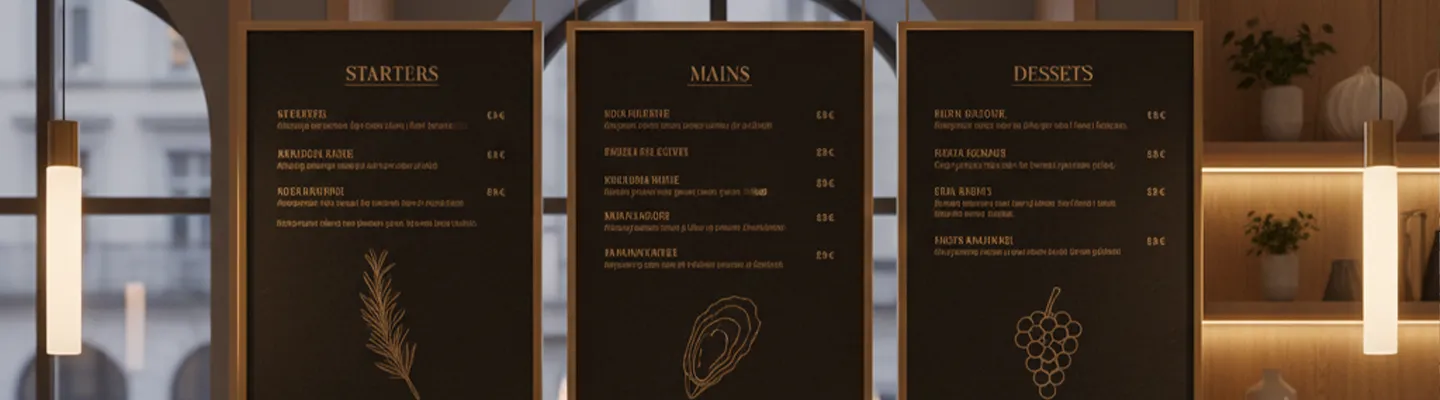
Photos and illustrations are some general creative design choices that can always elevate a menu. But some creative elements that can also make a menu are keeping in theming and branding of the restaurant. A good way to do this is to create a header that incorporates the branding and choose a color scheme that is more in line with the restaurant or logo. This uniformity in creative design looks very professional and clearly expresses the identity of the restaurant. More on the best color practices later.
Menus Based on Performance Data
If a restaurant is renowned for a certain dish, then the menu must reflect it. At the same time, the customers may also find something that becomes a fan favorite. It’s important to incorporate data from social media and sales when designing a menu. Steakhouses, for example, have featured sections on their menus of all the different cuts they are known for. Because they are known for them, customers will want to know what they cost and what they’re made from. Let the menu answer all the questions for them the minute they sit down.
Menu Layout Ideas
First things first, always remember to asterisk or star your dishes that include raw seafood or have a significant level of spice, and include the disclaimer at the bottom of your menu. That is a matter of safety and not marketing. When it comes to laying out everything else, however, you do have some options:
- Single-page — Ideal for small cafes and coffee shops. Because of their smaller size, they may be less visually heavy. It’s best to dedicate what white space you have to a double-sided, single-paged menu to item descriptions with a maximum of four visuals.
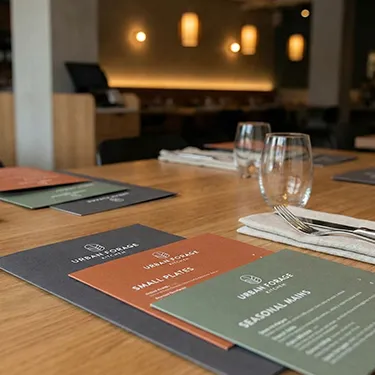
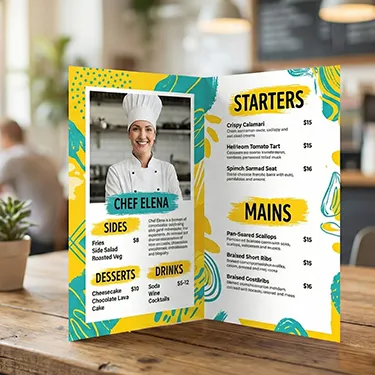
- Multi-page — The most common menu for restaurants with full-service kitchens with plenty of space for both organized sections and visuals, complete with short descriptions of each dish.
- Digital — With a scannable barcode at every table, digital menus are certainly an option. A webpage can be scrolled through with almost no limit on the number of visuals and design elements. However, data shows the average customer is still accustomed to physical menus.
How to Design a Menu
Now, into the nitty-gritty of what exactly the best design choices for restaurant menus are when it comes to these essential elements:
- Fonts— Typeface on a menu can have a little pizzazz based on the restaurant’s theme. A fancy, business casual restaurant may have a font akin to cursive writing, while the local deli has fonts that resemble handwriting from the kitchen. An Asian or Indian restaurant may also use fonts that look similar to the written language of their respective countries.
- Colors— Some colors make others pop, but the color decision should come from the restaurant’s identity. Italian restaurants tend to use red in their menus based on the prevalence of tomato sauces in the dishes. Meanwhile, some seafood restaurants use blue to allude to the ocean. Most restaurants, however, choose a color scheme that matches the interior.
- Descriptions— As mentioned before, good dish descriptions that not only describe the ingredients, but also the taste, can influence customers’ decisions. While it is possible to write a book of a menu like The Cheesecake Factory’s, how many people actually read through all of it? Descriptions should cut to the chase in two sentences or less.
Design and Print Your Menu With Midwest Custom Print
Create a menu with a custom design optimized with creativity, data, and psychology. Choose Midwest Custom Print’s menu printing to get your menus ready in time for your Chicago restaurant’s grand opening. Our brochure menus are available in four different folding styles with matte and gloss printing options—see brochure printing for details. Our team of designers isn’t just ready to help you design your menu. They will help optimize one based on your restaurant’s brand and identity.
Give us a call at 844-928-7866 or visit us in Chicago at 1100 W. Cermak Rd, Suite 731, and connect with our in-house design team to start today!
Frequently Asked Questions About Restaurant Menus
What Type of Paper are Menus Best Printed on?
Cardstock is the most common material used for printing menus. It’s not uncommon for waterproofed or laminated paper to be used. This helps avoid menus being damaged should a customer spill a beverage.
How Often Should Menus be Updated?
Rotating menus is a great practice that restaurants employ to capitalize on seasonal favorites. If different menus need to be printed, inquire with your local print shop about multi-order deals. Of course, if a new menu item is added, that should be showcased.
Where Should Prices be Placed on a Menu?
Prices should never have their own column or section as if they were entrees. They should always be listed across or near the dishes they mark up.